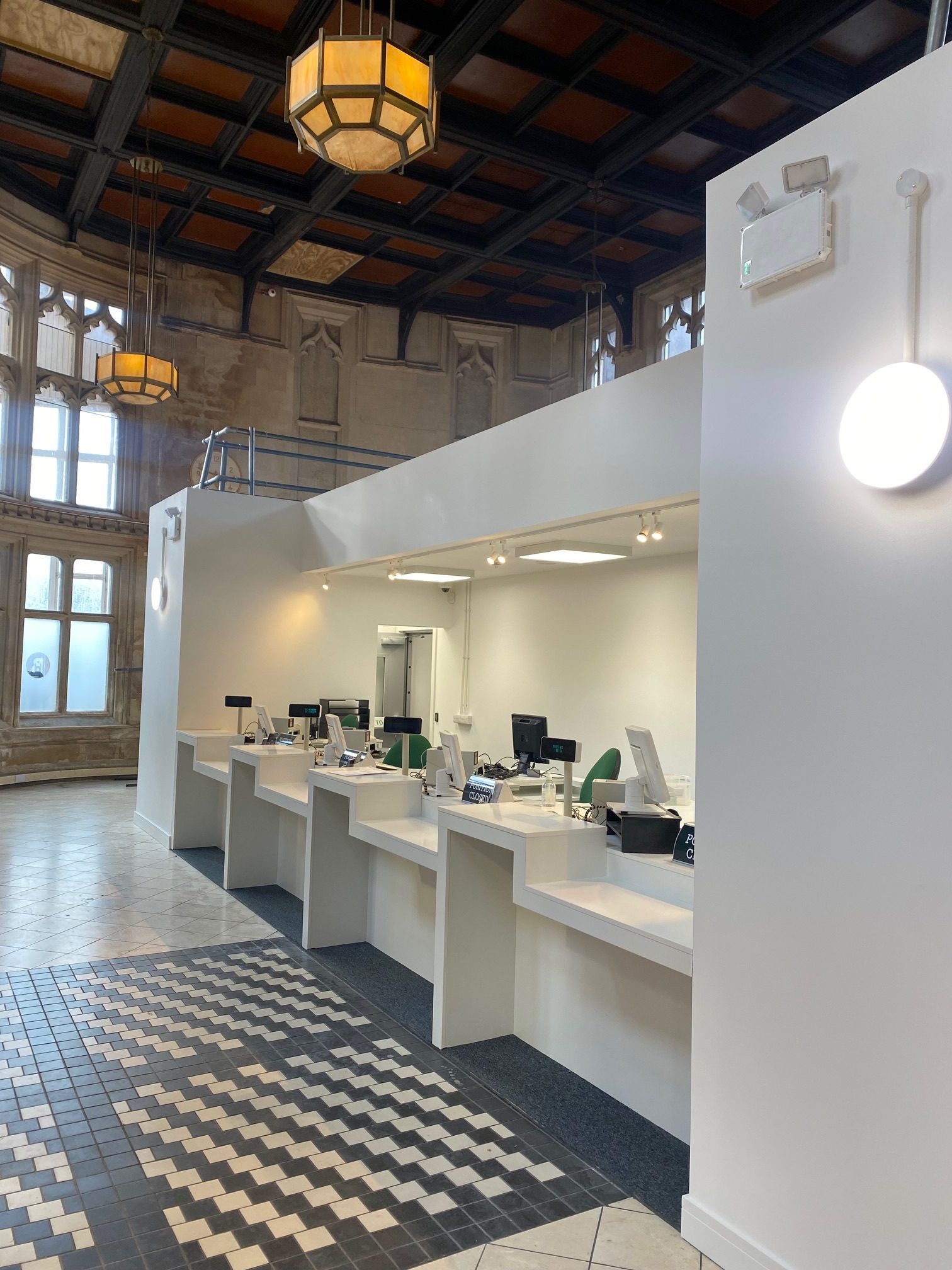
Bonaparte Building, Bristol Temple Meads Station
Client: SSE / Enerveo, on behalf of Network Rail
Project Overview
Bonaparte Building, Bristol Temple Meads Station
10 weeks up, 10 weeks down
Service: Commercial & Retail Refurbishment, Design & Build
Sector: Heritage & Conservation, Rail
- Approved Contractor: MLG UK Ltd
- Client: SSE / Enerveo, on behalf of Network Rail
- Duration: 10 weeks to build, 10 weeks to dismantle
- Work Carried Out: Design & build · security installation · data and comms · M&E and ventilation · joinery · refurbishment · demolition and material recovery
Scope of Work
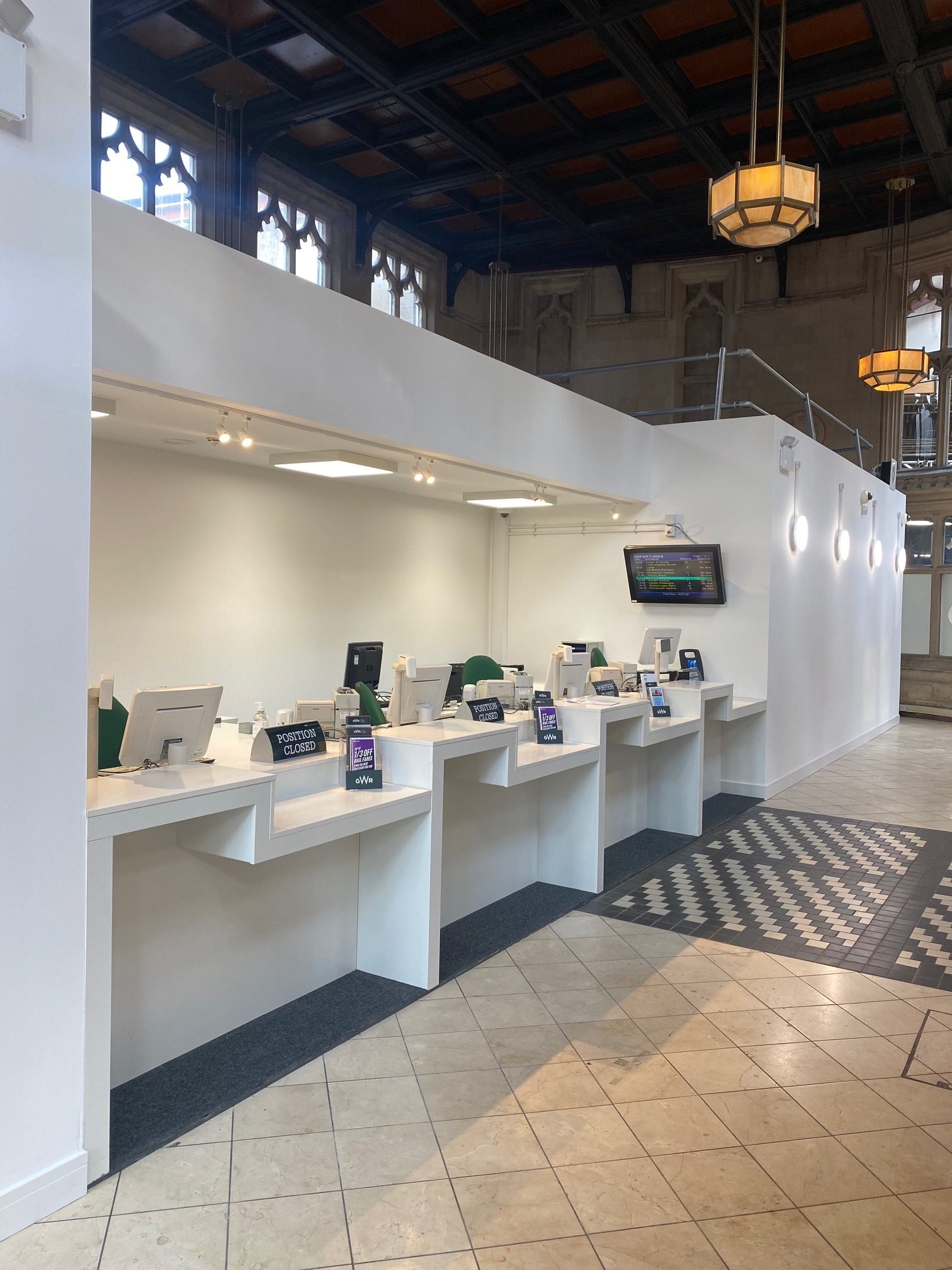
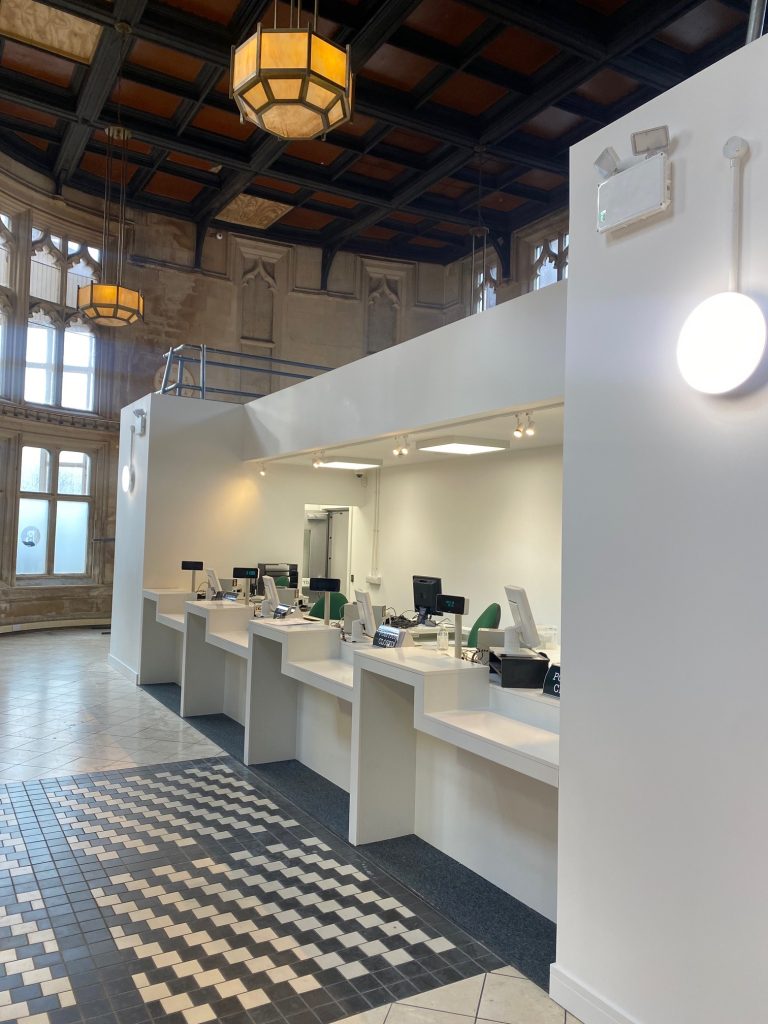
MLG designed and built a fully operational temporary ticket office inside the Bonaparte Building at Bristol Temple Meads, so the permanent ticket office could close for refurbishment and rewiring. Ten weeks to build it, and ten weeks to take it away again. The whole thing had to be constructed without disturbing anything in a listed building, including the floor, and on removal it had to look as though it had never been there.
- Complete temporary ticket office designed and installed inside a listed building
- Built to full specification standards: SR4 security steel doors, multiple security door sets, cash holding facilities
- Full data and communications installation, ventilation and air conditioning
- Welfare facilities so the office could operate as a proper workplace
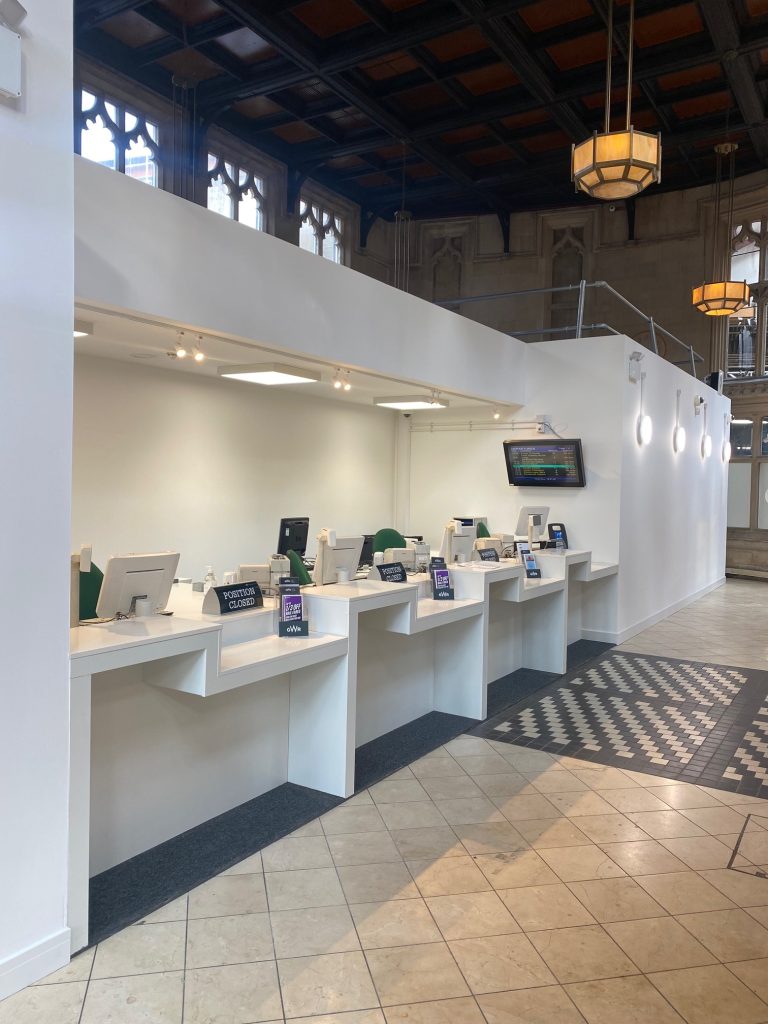
- Purpose-made specialist ticket desks
- Refurbishment of the permanent ticket office while it was closed: floors, walls, decoration and desks, upstairs and downstairs
- On completion, contracted to dismantle the temporary office and recycle everything
Systems installed
- Security doors: SR4-rated security steel doors, multiple sets
- Desks: Specialist ticket office desks, purpose made
- M&E: Ventilation and air conditioning
- Data: Full data and communications installation
Challenges & Constraints
Ticketing cannot stop
To refurbish and rewire the permanent ticket office, a fully functioning replacement had to exist first, same security rating, same cash handling, same systems.
Nothing fixed, not even the floor
The Bonaparte Building is Grade II listed. Nothing could be fixed into historic fabric, nothing cut, and the floor could not be disturbed.
It had to leave no trace
The specification was reversibility: on removal the building had to look as though a working ticket office had never stood in it.
Project Execution & Techniques
Designed for its removal
The structure was designed for dismantling from the first drawing, freestanding or reversibly fixed throughout, so the listed fabric carried the building rather than being fixed into by it.
One specification, not a shell
MLG designed as well as built, so security, data, ventilation and cash handling were resolved together rather than bolted onto a structure afterwards.
Built to permanent standards
Full GWR ticket office standard, SR4 steel security doors, multiple security door sets, secure walls and ceilings, and cash holding facilities.
A workplace, not a booth
Full data and comms, ventilation, air conditioning, welfare facilities and purpose-made ticket desks, so staff could work in it for the duration.
Outcome & Long-Term Benefits
Ticketing never stopped
The permanent office was refurbished and rewired while the temporary one traded.
Ten weeks each way
Ten weeks to build and ten weeks to dismantle, to a fixed programme on a live station.
No trace left
The Bonaparte Building was handed back showing no sign that a ticket office had stood in it, which was the specification, not a bonus.
Everything back in service
The SR4 doors, security door sets and purpose-made desks were recovered and returned to Network Rail storage for reuse at other stations.
Conclusion
Bristol Temple Meads needed its permanent ticket office closed for refurbishment and rewiring, and ticketing could not stop while that happened. The replacement had to go inside the Grade II listed Bonaparte Building, with nothing fixed into historic fabric, not even the floor, and no trace left when it came out.
MLG designed the structure for its own removal from the first drawing, built it to full GWR ticket office standard with SR4 security doors and proper welfare, and took it down again ten weeks later. The building was handed back as though nothing had been there, and every component went into Network Rail storage for reuse at other stations.
Ready to start your project?
Contact MLG UK today.